


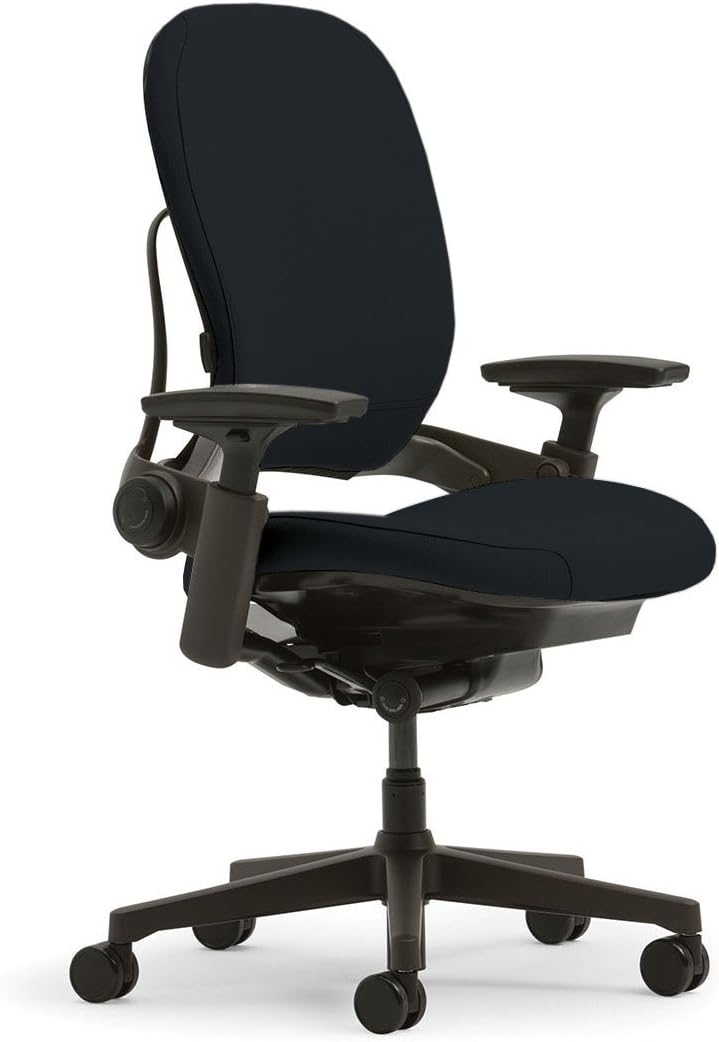
Best Ergonomic Chair for Short People 2026
This article contains affiliate links. If you purchase through these links, we may earn a small commission at no extra cost to you.
Most ergonomic chairs are engineered for a 5'8"–6'2" reference frame. The seat height floors are too high. The lumbar sits too low. The seat depth is too long, putting edge pressure behind the knees. If you're under 5'5", the problem isn't that you need to "get used to it" — it's that you're sitting in the wrong chair.
Shorter sitters have a narrow set of non-negotiable specs. The minimum seat height has to reach your actual thigh-to-floor measurement. Seat depth either needs to be shallow from the factory or adjustable by at least 2 inches. Lumbar support that lands on your ribcage is worse than no lumbar at all. The chairs below were chosen because they actually clear those bars, not because they use the word "ergonomic" in the product title.
What to look for: specs that actually matter for shorter frames
Minimum seat height — the most important number on the page
Seat height is measured from the floor to the top of the compressed seat cushion. Your ideal seated position puts your feet flat on the floor with thighs parallel or angled slightly downward. For most people under 5'5", that means you need a minimum seat height somewhere between 14.5" and 17". Anything with a floor above 17.5" is going to leave your feet dangling unless you supplement with a footrest.
Don't get misled by "seat height range" specs that advertise 16"–21" — the 21" ceiling is irrelevant to you. The floor is everything.
Seat depth adjustment — often the dealbreaker
Standard seat depth runs 17"–20". If you have a shorter femur (thigh bone), that means the front edge of the seat is pressing into the backs of your knees. That cuts off circulation and causes leg fatigue within an hour. Look for seats that either start shallow (under 16.5") or offer a sliding seat pan that adjusts at least 2 inches.
Lumbar adjustability — height matters more than depth
Most budget chairs offer lumbar depth adjustment. Height adjustment is rarer and worth paying for. On a shorter torso, lumbar support positioned for a 6-footer lands in the mid-back rather than the lumbar curve, which is actively uncomfortable. Prioritize chairs with independent lumbar height control.
Weight capacity — don't ignore it, even at lower weights
Chairs at the lower end of this list hold 300 lbs. That's plenty for most shorter sitters. The Steelcase Leap V2 is rated for 400 lbs, which also signals a more robust frame. The spec matters because heavier internal mechanisms tend to correlate with longer service life, regardless of the user's actual weight.
Warranty fine print — chairs degrade differently than they fail
Most reputable chairs offer 5–12 year warranties, but the coverage varies wildly. Some warranties cover parts but not labor. Some cover the mechanism but not the foam (which degrades first). Check whether cylinder replacement — one of the most common repairs — is covered and for how long.
The chairs
Branch Ergonomic Chair — Best Overall
A highly adjustable mid-range chair with a seat height floor of approximately 16.1" and a seat depth slider — two specs that matter above everything else for shorter sitters. Branch's direct-to-consumer model keeps the price reasonable for what the mechanism delivers.
A strong fit for sitters in the 5'0"–5'5" range who want genuine adjustability without the $1,000+ price jump to Steelcase or Herman Miller.
Autonomous ErgoChair Pro — Best Budget
At roughly $240, this is the only chair on this list under $350. Owner reports on r/homeoffice suggest the lumbar adjustment range is genuinely usable for shorter torsos — not just a marketing checkbox. Caveat: 31 Amazon reviews is a small sample; treat the 4.4★ rating as directional, not definitive.
Best for sitters who want to spend under $300 and are willing to accept that long-term durability is less proven than with the pricier options.
Herman Miller Aeron (Size A) — Best for Frames Under 5'2"
The Aeron Size A was specifically engineered for smaller bodies. The minimum seat height of approximately 14.75" is the lowest on this list by a meaningful margin — close to an inch lower than the next competitor. If you're 4'11"–5'2" and struggle to find a chair that doesn't put you in a perpetual half-squat, this is the purpose-built answer.
That 3.5★ average across 808 Amazon reviews deserves attention. Dig into the one-stars: the complaints cluster around cylinder drift, mesh tension issues, and the gap between the Amazon-sold unit and what you get through authorized dealers. Buying used or refurbished from a certified dealer is frequently mentioned as the smarter path.
Best for shorter sitters who prioritize fit precision over price and are willing to source carefully — certified refurb or direct from Herman Miller authorized dealers rather than third-party Amazon listings.
Humanscale Freedom Headrest Chair — Best for Low-Fuss Recline
Humanscale's design philosophy is "fewer adjustments, self-correcting mechanism." The Freedom uses a counterbalance recline that automatically adjusts to your body weight — no tension knob to dial in. For shorter sitters who don't want to spend 45 minutes calibrating a new chair, that's a genuine selling point. The integrated headrest is one of the few in this category that actually accommodates shorter necks without feeling like it's pushing your head forward.
Best for shorter sitters who recline frequently, want an automatic mechanism rather than manual tension adjustment, and don't need aggressive lumbar customization.
Steelcase Leap V2 — Best for All-Day Sitting
The Leap V2's standout feature for shorter sitters is the lower back firmness adjustment and the "LiveBack" flex that mirrors spinal movement rather than holding a fixed recline angle. Minimum seat height of approximately 15.5" clears the bar for most people over 5'0". The 400 lb weight capacity also suggests a frame built for decades, not years. At roughly $1,350, this is a serious financial commitment — but long-term owner reports consistently indicate that chairs purchased a decade ago are still in daily use.
Best for remote workers who sit 8+ hours a day, have a history of lower back problems, and are treating a chair purchase like a five-year infrastructure investment rather than furniture.
Comparison: side-by-side specs
Seat height range = published max − min (inches); derived from manufacturer specs. Lower minimum seat height = better for shorter sitters. Prices are typical list; expect variance.
| Chair | Min. seat ht. | Seat ht. range† | Seat depth adj. | Weight cap. | Typical price | Best for |
|---|---|---|---|---|---|---|
| Branch Ergonomic Chair | ~16.1" | ~4.4" | Yes | 300 lbs | ~$389 | 5'0"–5'5" all-day sitters |
| Autonomous ErgoChair Pro | ~17.3" | ~3.2" | Yes | 300 lbs | ~$240 | Budget-conscious buyers |
| Humanscale Freedom Headrest | ~16.5"‡ | ~4.5"‡ | No | 300 lbs | ~$220 | Frequent recliners |
| Herman Miller Aeron (Size A) | ~14.75" | ~4.0" | No | 300 lbs | ~$630 | Frames under 5'2" |
| Steelcase Leap V2 | ~15.5" | ~5.0" | Yes | 400 lbs | ~$1,351 | Full-day seated work |
† Seat height range derived from published min/max figures. ‡ Humanscale Freedom figures are approximate — verify against current spec sheet before purchasing.
Which chair is for you
Pick the Branch Ergonomic Chair if you're between 5'0" and 5'5", want the most adjustability levers for the price, and need a chair that ships today without a used-market search.
Pick the Autonomous ErgoChair Pro if you're working with a $300-or-under budget and your minimum seat height requirement is 17.3" or higher (i.e., you're closer to 5'3"–5'5" than 4'11").
Pick the Herman Miller Aeron Size A if you're under 5'2" and need the lowest seat height floor available in a mainstream ergonomic chair — and buy it through an authorized dealer, not a third-party Amazon listing.
Pick the Humanscale Freedom Headrest if you recline frequently, dislike chair calibration, and want a self-adjusting mechanism with a headrest that actually fits a shorter neck.
Pick the Steelcase Leap V2 if you're in your chair all day, have existing back problems, and are treating this as a long-term ergonomic investment rather than a furniture purchase.
Skip this category entirely if you're under 4'9" and can't trial the chair in person — pair any of these with a quality footrest (see our guide on ergonomic workstation accessories) and revisit seat height calculations before committing.
FAQ
What's the biggest mistake short people make when buying an ergonomic chair?
Focusing on lumbar support marketing instead of checking the minimum seat height first. If your feet aren't flat on the floor, no lumbar adjustment in the world will make that chair comfortable long-term. The minimum seat height number — not the maximum — is the first spec to verify. If it's above your floor-to-thigh measurement, move on.
Do I need a footrest if I use one of these chairs?
Possibly. Even the Aeron Size A's ~14.75" floor won't suit every shorter frame. If your floor-to-thigh distance is under 14", a footrest is the practical fix rather than continuing to search for a chair with a lower floor. Footrests also let you use a wider range of chairs, which opens up the used/refurb market significantly.
Is buying a refurbished Steelcase or Herman Miller worth it?
Based on long-term owner feedback, yes — with caveats. Both brands have certified refurbishment programs and established third-party refurbishers with warranties. The main risk is the Amazon used market: condition descriptions are often inaccurate, and you lose the brand warranty. Buy refurb from a certified dealer, not an Amazon third-party seller.
Are "short people" chair adjustments just seat height, or is there more to it?
Seat height gets the most attention, but seat depth is often the larger day-to-day problem. A seat that's too deep puts the front edge behind your knees, cutting off circulation. Shorter femur length — not just shorter stature — is the driver. Look for seat depth adjustment of at least 2 inches, not just a low seat height minimum.
How we chose
For this guide, manufacturer spec sheets were cross-referenced with long-term owner reports from r/homeoffice, r/ErgoMechanics, and manufacturer community forums. Published expert reviews from Wirecutter and comparable outlets were reviewed for category framing. Amazon verified reviews were analyzed with particular weight on 1- and 2-star reports, where fit complaints (seat-too-high, lumbar-too-low, cylinder drift) surface most clearly. Nine chairs were evaluated before narrowing to five. Primary shortlisting criteria: minimum seat height under 17.5", the presence of either seat depth adjustment or a shallow factory depth, independent lumbar height control where available, and verifiable warranty terms. Chairs with no meaningful short-sitter differentiation from the shortlist were cut.
Bottom line
For the majority of short sitters, the Branch Ergonomic Chair ($389) is the answer — it combines the lowest minimum seat height in its price tier with a seat depth slider, which solves both of the core fit problems without requiring you to spend $600+. If budget is the constraint, the Autonomous ErgoChair Pro ($240) is the only sub-$300 option with enough adjustment range to be worth recommending, though its long-term track record is still thin. If you're under 5'2" and want the chair that was actually designed for your frame, the Herman Miller Aeron Size A ($630) earns its premium — but buy it through authorized channels, not from third-party Amazon listings with variable condition. For remote workers who live in their chair all day, the Steelcase Leap V2 ($1,351) is the serious long-term investment that consistently earns its keep a decade later.