


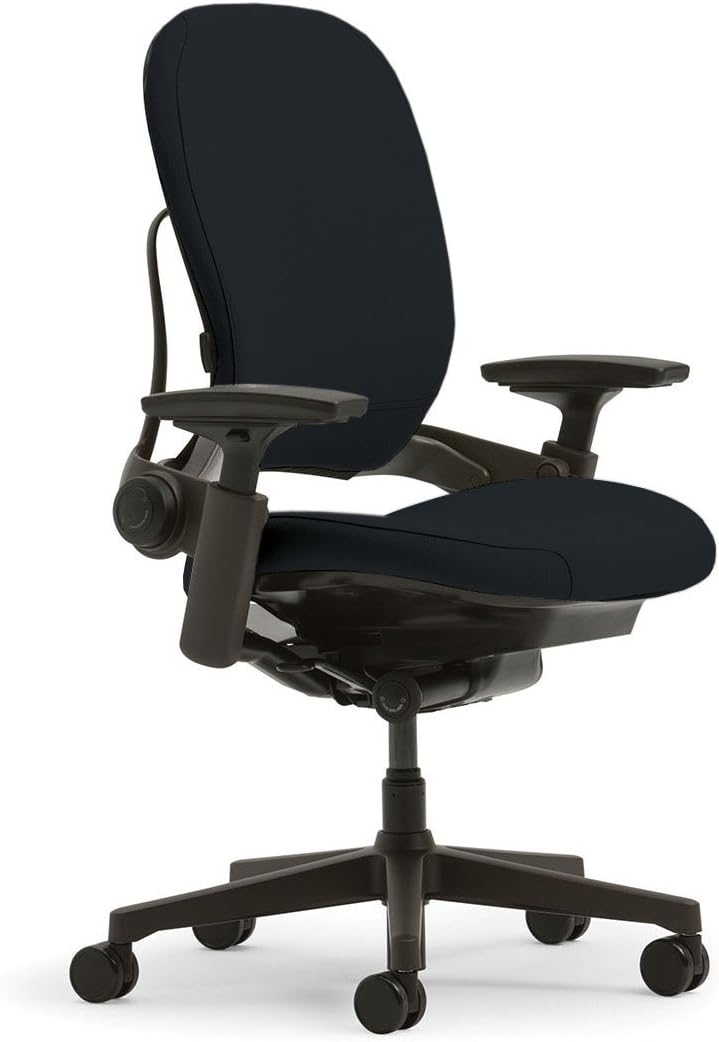


Best Office Chair with Adjustable Lumbar Support 2026
This article contains affiliate links. If you purchase through these links, we may earn a small commission at no extra cost to you.
Who is this chair for, actually?
Before you scroll to the table, place yourself in one of three scenarios. The recommendations split cleanly along these lines.
Scenario 1: You work 6–8 hours a day at a desk and your employer isn't paying for it. You need real lumbar support that adjusts to your body — not a lumbar pillow bolted to a gaming chair — but you're spending your own money. Budget ceiling: roughly $500. You want a chair that will still feel solid in three years.
Scenario 2: You're a serious remote worker or have an existing back problem. Eight or more hours daily, possibly with a diagnosed condition (herniated disc, scoliosis). Price is secondary to mechanical quality. You want a chair that adjusts to how your back moves, not just how it sits statically.
Scenario 3: You want a gaming chair with adjustable lumbar. You'll use this chair for both work and gaming, you want the recline, and you're skeptical of traditional office chairs on aesthetic grounds.
Decision framework
Pick the HON Ignition 2.0 if you're in Scenario 1 and want a proven, commercial-grade chair with documented longevity and a large enough owner base to trust the data.
Pick the Autonomous ErgoChair Pro if Scenario 1 but your budget caps near $250 and you're comfortable with a thinner review history.
Pick the Steelcase Leap V2 if you're in Scenario 2, full stop. The LiveBack system is the meaningful differentiator at this price tier and published expert reviews consistently treat it as the benchmark for active lumbar support.
Pick the Secretlab Titan Evo if you're squarely in Scenario 3 — gaming-forward aesthetics, magnetic lumbar pillow, and a wide recline range that traditional office chairs don't offer.
Consider the Branch Ergonomic Chair if you want Scenario 1 quality in a more minimal, modern aesthetic and don't mind paying a slight premium over the HON for the design.
Approach the Herman Miller Aeron carefully — only two Amazon reviews makes its listing-level data nearly meaningless. Its reputation is earned over decades, but verify you need PostureFit SL's dual-zone sacral/lumbar support specifically before absorbing a $1,000 price tag.
Skip adjustable-lumbar chairs entirely if you only sit for two to three hours a day and you're already pain-free. A good seat cushion and a static back chair will serve you better than an underutilized mechanism you're paying a premium for.
Comparison table
The derived column here is adjustability points — a count of the distinct lumbar/ergonomic adjustments each chair offers (height, depth, tension, tilt, armrest axes, headrest). Spec sheets list these features individually and never sum them; side-by-side, the count tells you whether a chair's "fully adjustable" marketing claim actually holds.
| Chair | Typical Price | Weight Capacity | Lumbar Type | Adjustability Points | Warranty (structural) | Best for |
|---|---|---|---|---|---|---|
| HON Ignition 2.0 | ~$461 | 300 lb | Height + depth adjustable | 7 | Lifetime (frame) | Most buyers — proven at scale |
| Autonomous ErgoChair Pro | ~$240 | 300 lb | Height + depth adjustable | 8 | 2 years | Budget-first, mesh-back preference |
| Branch Ergonomic Chair | ~$389 | 275 lb | Height + depth adjustable | 7 | 5 years | Design-conscious Scenario 1 buyers |
| Steelcase Leap V2 | ~$1,351 | 400 lb | LiveBack (dynamic flex) | 9 | 12 years | Heavy daily use, back issues |
| Secretlab Titan Evo | ~$669 | 395 lb | Magnetic pillow (height adj.) | 6 | 5 years | Gaming + work hybrid users |
| Herman Miller Aeron | ~$1,000 | 350 lb | PostureFit SL (sacral + lumbar) | 8 | 12 years | Mesh-critical, proven-brand buyers |
Adjustability points counted: lumbar height, lumbar depth/tension, seat height, seat depth, tilt tension, tilt lock positions, armrest axes (each additional axis = +1). Gaming chairs lose points here because magnetic/pillow lumbar doesn't adjust depth mechanically.
The chairs
HON Ignition 2.0 — Best Overall
With over 1,500 Amazon reviews and a lifetime warranty on the frame, the HON Ignition 2.0 has a larger and older owner data set than anything else in this price band. The lumbar pad adjusts both height and depth — which is the minimum bar for actually fitting different body types.
This is the chair for Scenario 1 buyers who want commercial-grade durability without a commercial-grade price. The 300 lb weight capacity and lifetime structural warranty make it unusually well-specced for its tier.
Autonomous ErgoChair Pro — Best Budget
The sub-$250 price is the headline, but the ErgoChair Pro earns its place by including genuine height- and depth-adjustable lumbar — a spec many chairs at this price point fake with a static pad and bold marketing copy. At 31 reviews, the sample size is thin.
Best for Scenario 1 buyers who need to stay under $250 and are comfortable accepting that a 31-review product carries more uncertainty than a 1,500-review one. If budget isn't the constraint, move up.
Branch Ergonomic Chair — Best Design-Forward Mid-Range
Branch positions this chair squarely against the Aeron aesthetic at a fraction of the price. The lumbar system adjusts height and depth, weight capacity sits at 275 lb (the lowest on this list — worth noting if you're near that ceiling), and the 5-year warranty is reasonable for the price.
Scenario 1 buyers who find the HON's commercial aesthetic too plain and are willing to pay ~$70 more for a cleaner look. Know the 275 lb capacity limit before buying.
Steelcase Leap V2 — Best for Heavy Daily Use
The LiveBack system is the only mechanism on this list that flexes with your spine as you shift posture, rather than providing a static (if adjustable) support point. At a typical ~$1,351 on Amazon, it's asking a lot — but published expert reviews and long-term owner reports on Reddit consistently treat the Leap V2 as the durability and ergonomics benchmark in this category. The 12-year warranty reflects Steelcase's confidence in that.
Scenario 2, unambiguously. If you're sitting eight-plus hours or managing a back condition, the $900 premium over the HON is the most defensible spending decision on this page. For anything less intensive, it's harder to justify.
Secretlab Titan Evo — Best Gaming-Work Hybrid
This is the only chair on the list built around a gaming-first design language, and it shows: the magnetic lumbar pillow system is height-adjustable but not depth-adjustable in the mechanical sense. The 395 lb weight capacity is one of the highest here, and the full-recline range is wider than any of the traditional office chairs.
Scenario 3 only. If you're primarily a desk worker with back concerns, the Leap V2 or HON will serve your lumbar needs better. If you want one chair for both gaming sessions and work calls and you're fine with pillow-style lumbar, this is the choice.
Herman Miller Aeron — Best for Mesh Breathability + Brand Pedigree
Two Amazon reviews is an almost useless data set, and at ~$1,000, that's a problem. The Aeron's reputation is real and decades-old — the PostureFit SL sacral-plus-lumbar system is a genuine dual-zone differentiator — but verify you're buying from an authorized seller, because the used and gray-market Aeron ecosystem is large and the warranty (12 years) doesn't transfer.
Best for Scenario 2 buyers who specifically need the 8Z Pellicle mesh for heat and airflow management, have already sat in one, and are buying from an authorized source. Do not buy this blind based on two Amazon reviews.
What changed in 2026: the gaming-chair line is blurring
Two years ago, "gaming chair with lumbar support" and "ergonomic office chair" were almost entirely separate buying decisions. That line is genuinely blurring. The Secretlab Titan Evo and several chairs not on this shortlist now meet the adjustable-lumbar bar that was once a traditional office-chair exclusive. The tradeoff remains the same — pillow lumbar versus mechanical lumbar — but buyers in Scenario 3 no longer have to compromise as severely as they once did. If you're considering a gaming-aesthetic chair, still verify whether the lumbar mechanism is height-only or height-plus-depth; marketing materials routinely obscure this distinction.
Common mistake: conflating "lumbar support" with "adjustable lumbar support"
A fixed foam lumbar bump and a mechanically adjustable lumbar system are not the same product. Every chair advertises "lumbar support." The relevant question is: does it adjust in both height and depth/tension, or just one axis? Static lumbar that doesn't match your specific lumbar curve can make back pain worse, not better. Every chair on this shortlist adjusts in at least one dimension; the comparison table above clarifies which adjust in both.
FAQ
Is a $240 chair worth it, or should I just save up for the Leap V2? Depends entirely on daily use hours. Under six hours a day with no existing back problems, the Autonomous ErgoChair Pro or HON Ignition 2.0 are genuinely sufficient. Over eight hours or with a diagnosed spinal condition, the Leap V2's dynamic support system is harder to replicate cheaply — long-term owner reports suggest the investment pays off over a three-to-five year horizon.
Do adjustable lumbar chairs help with lower back pain? Based on published ergonomics research and owner feedback: they can, but only if the lumbar adjustment actually fits your body. A lumbar pad set too high or too low creates a pressure point rather than support. Adjustability is a prerequisite; correct calibration is the actual intervention. If you've used adjustable chairs without improvement, the issue may be seat depth or pelvis tilt, not lumbar height.
Is the Herman Miller Aeron still worth it in 2026? For most buyers, no — not at this price versus the Leap V2, which trades PostureFit SL for LiveBack and is similarly priced when bought through the right channel. The Aeron is worth it if mesh breathability is genuinely a priority (hot climates, no AC) or if you've already used one and know it fits your body. Don't buy the reputation; buy the fit.
What does "weight capacity" actually tell me? It's the manufacturer's structural rating — meaning the chair is tested to hold that load without frame failure. It's not a comfort rating. If you're near the stated limit, check the seat pan width and seat foam density in owner reviews, which matter more for comfort at higher weights than the structural ceiling does.
How we chose
This shortlist was built from manufacturer spec sheets cross-referenced against owner reviews — with heavy weighting on 1- and 2-star reports flagging lumbar drift, cylinder failure, and armrest wobble. Long-term Reddit threads in r/homeoffice and r/AskBuyingAdvice provided pattern data on real-world durability that short-term reviews miss. Published roundups from major ergonomics-focused outlets helped set the initial long list. Eleven chairs were considered in the $200–$1,400 adjustable-lumbar segment; six made the final cut. Dominant cut criteria: verifiable lumbar adjustability in at least one axis (height or depth, with preference for both), documented weight-capacity ratings, and warranties that cover structural failure for a meaningful period. Assembly complaints and customer service patterns factored into the assessment where owner report volume was sufficient to draw conclusions.
Bottom line
For most remote workers spending their own money, the HON Ignition 2.0 ($461) is the answer: proven at scale with 1,500-plus reviews, a lifetime frame warranty, and genuine height-plus-depth lumbar adjustment. If budget is the hard constraint, the Autonomous ErgoChair Pro ($240) clears the minimum bar, though its thin review base means you're accepting more uncertainty. For anyone sitting eight or more hours daily or managing a back condition, the Steelcase Leap V2 (~$1,351) is the investment that long-term owner data consistently supports — the LiveBack system is a meaningful mechanical differentiator, not marketing language. The Secretlab Titan Evo fills a genuine niche for gaming-work hybrid users; the Herman Miller Aeron is legitimate but buy it with full knowledge of the gray-market risk and the two-review Amazon sample problem. When the evidence changes on any of these, this page changes.