
Rolling Cart vs Stationary Cabinet: Which Wins?
This article contains affiliate links. If you purchase through these links, we may earn a small commission at no extra cost to you.
This matchup comes down to one question: is your storage problem permanent or situational?
A stationary lateral file cabinet is a commitment — to a location, to a workflow, and to several hundred dollars. A rolling cart is a workaround that, done right, becomes infrastructure. For most home office setups, those two things serve genuinely different people. The challenge is knowing which one you actually are.
The Origami Steel Folding Storage Cart
The Origami cart earns its reputation from a single feature most office carts ignore: it folds flat when empty. That's not a gimmick — it's the reason this thing works in apartments, shared offices, and rooms that moonlight as guest bedrooms. Structurally, it's an open-shelf steel wire design with casters, which means airflow around stored items and easy visual access to everything on it.
At roughly $209.99 and 4.7 stars across more than 3,700 owner reviews, the feedback baseline is unusually strong for this category. That said, open-wire carts are not for everyone — documents need bins or boxes, and rolling stability depends entirely on floor surface and caster quality.
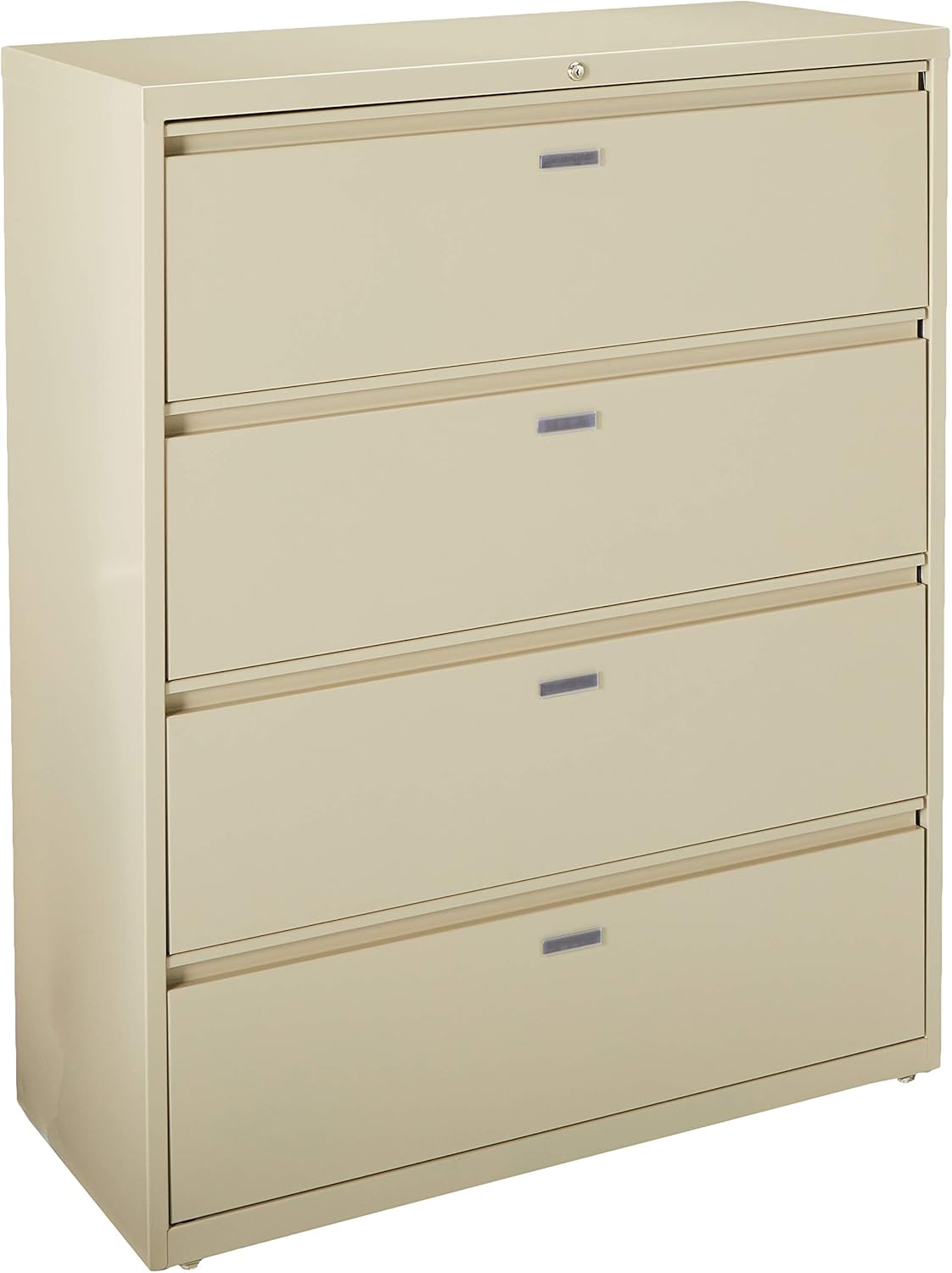
The Lorell 4-Drawer Lateral File Cabinet
Lorell is a commercial office furniture brand, and the 4-Drawer Lateral File Cabinet reads like one: it's a heavy steel unit built for decades of file storage, not for the person who might rearrange their office next spring. Lateral file drawers offer wider storage access than vertical cabinets, and four drawers give you serious document capacity.
At roughly $965.81, this is not an impulse buy. The 3.9-star average across 103 reviews — a meaningfully smaller sample than the Origami — reflects a more polarized owner base. Published reports flag assembly complexity and shipping damage as recurring friction points, which matters when you're spending close to a thousand dollars. There is no mobility here; this unit goes where you put it and stays there.
Head-to-Head: Where They Actually Differ
Mobility and Flexibility
The Origami wins this dimension decisively, and it's not close. Locking casters mean it can serve as a printer stand, a monitor riser base, an overflow shelf, or a room divider — then roll out of the way. The Lorell doesn't move. Once positioned, repositioning it is a furniture-moving event. Owner reports across similar lateral cabinets consistently flag this as an underestimated frustration in home office contexts where room usage shifts seasonally.
Document and File Storage
Here the Lorell wins, also not close. Lateral file drawers are purpose-built for hanging file folders. If you maintain physical files — tax records, contracts, client documents — the Origami's open wire shelves require additional bins or boxes to accomplish what the Lorell handles natively. You can make an open cart work for filing, but you're adding friction and accessories to approximate what the cabinet does out of the box.
Long-Term Durability Signals
Steel construction on both units checks the right box, but the form factors carry different failure modes. The Origami's folding mechanism and casters are the weak points owner reviews flag most; the Lorell's weight and drawer-slide quality are its variables. Published long-term owner feedback on lateral file cabinets in this price range tends to be favorable on structure, less so on drawer alignment over years of heavy use. The Origami's 4.7-star rating on a large review base is a stronger durability signal than the Lorell's 3.9 across a much smaller sample.
Price-to-Utility Ratio
The Lorell costs roughly 4.6× more than the Origami (≈$966 vs. ≈$210). For buyers who genuinely live in the file cabinet — daily access to physical documents — that premium has a real use case. For everyone else, paying nearly $800 more for storage that can't move and locks you into a single configuration is hard to justify. Most home office workers don't need that cabinet; they think they do until they have it.
At a Glance
| Origami Steel Folding Cart | Lorell 4-Drawer Lateral Cabinet | |
|---|---|---|
| Typical price | ~$209.99 | ~$965.81 |
| Mobility | Yes — locking casters | No |
| Primary storage type | Open-shelf, general purpose | Lateral file drawers (hanging folders) |
| Build material | Steel wire | Steel |
| Star rating (sample size) | 4.7★ (3,710 reviews) | 3.9★ (103 reviews) |
| Locks / security | No | Yes (drawer lock standard) |
| Folds flat | Yes | No |
| Price per storage tier | ~$210 (multi-shelf, single unit) | ~$241 per drawer (4 drawers) |
Derived metric — price per storage tier: The Origami delivers multiple open shelves for ~$210 total. The Lorell's four drawers work out to roughly $241 each. If those drawers are full of active files, you're paying for genuine utility. If two of those drawers sit half-empty, you've bought a $500 mistake.
Who Should Buy Which
Buy the Origami Steel Folding Storage Cart if you need flexible, mobile storage that earns its keep in more than one configuration — printer stand today, supply shelf tomorrow, folded in a closet when company comes.
Buy the Lorell 4-Drawer Lateral File Cabinet if you maintain a serious physical filing system, need lockable document storage, and have a permanent, dedicated location where a heavy steel cabinet will earn its square footage indefinitely.
Skip both if your storage problem is primarily about desk surface clutter or cable chaos — a rolling cart and a lateral file cabinet both miss that problem entirely. Look at desktop organizers or cable management trays instead.
Bottom Line
The Origami cart is the right call for the overwhelming majority of home office workers — it's flexible, affordable, and honest about what it is. The Lorell is a legitimate product for a real use case, but that use case is narrower than most buyers realize when they're browsing. Don't spend $966 on a filing solution until you've confirmed you actually have a filing problem — not a general clutter problem that would be better served by something that costs $755 less and rolls out of the way when you need it to.